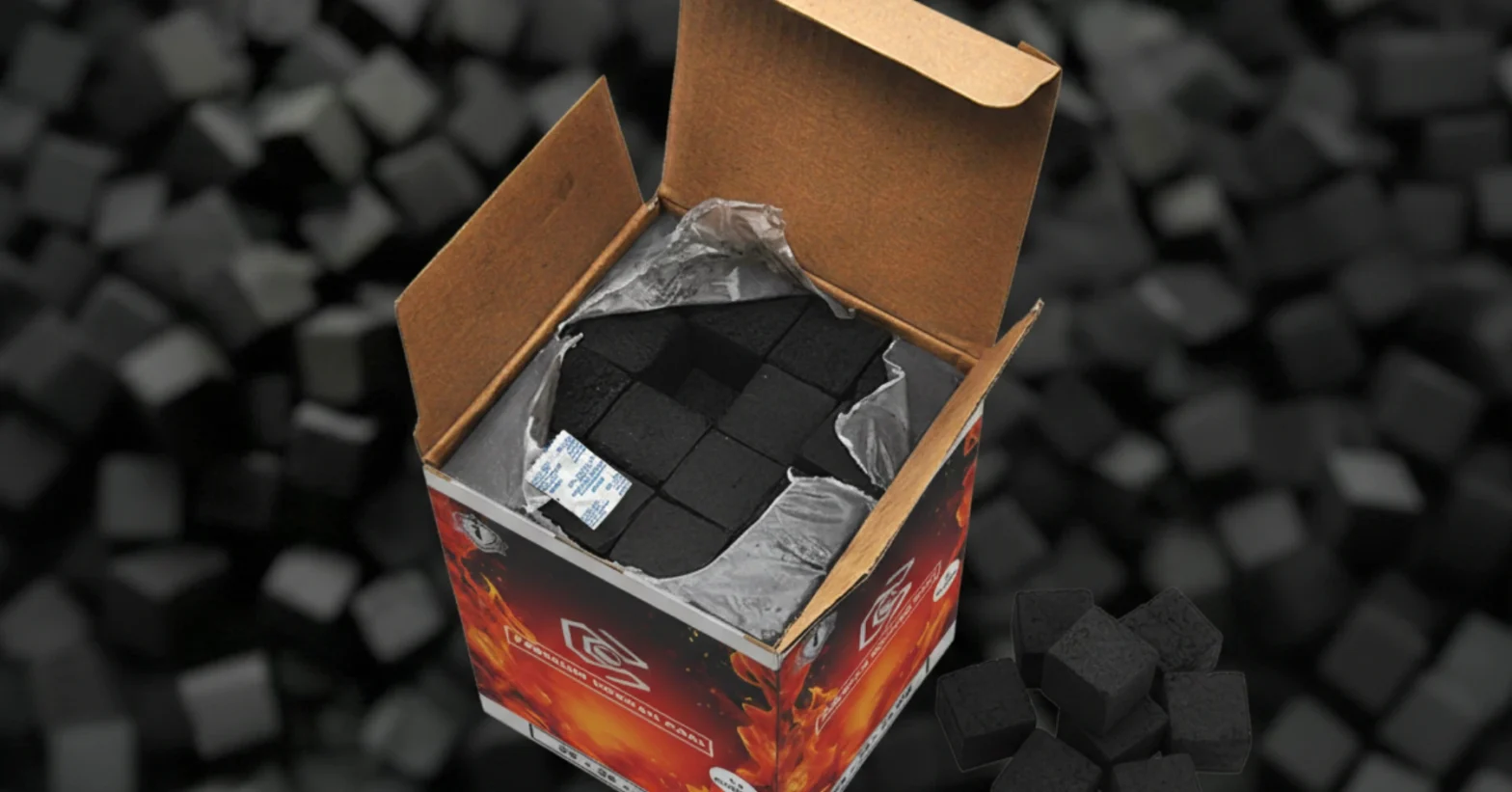
Let me walk you through everything you need to know about coconut hookah charcoal briquettes packaging and how you can transform generic products into your own premium brand that customers will remember.
What Types of Packaging Are Available for Coconut Charcoal Briquettes?
Think of this as your packaging toolkit, each option serving different needs and budgets.
Standard Retail Packaging
Cardboard Boxes: The classic choice that never goes out of style. These work brilliantly for retail environments where shelf appeal matters. You can customize sizes from small 1kg boxes perfect for home use to larger 10kg options for serious hookah enthusiasts.
But here’s where it gets interesting. Not all cardboard is created equal, and choosing the right material can make or break your packaging success.
Cardboard Material Types & Thickness Options
Single Wall Corrugated (3-4mm thickness) Perfect for lightweight charcoal packages up to 2kg. Cost-effective but provides basic protection. Think of this as your entry-level option that still looks professional.
Double Wall Corrugated (6-7mm thickness)
The sweet spot for most hookah charcoal packaging. Handles 2-5kg loads beautifully while maintaining structural integrity during shipping. This is what most premium brands choose.
Triple Wall Corrugated (15mm thickness) Heavy-duty protection for bulk orders or long-distance shipping. Overkill for most retail applications but essential if you’re shipping internationally or dealing with rough handling.
Solid Fiber Board (SFB) – 1.5-3mm Smooth, premium feel that’s perfect for luxury positioning. Takes printing beautifully but costs more. Ahmad from Dubai swears by 2.5mm SFB for his premium hookah lounge supplies.
White Top Kraft (300-400 GSM) Single layer but surprisingly sturdy. The white surface provides excellent print quality while the kraft backing adds strength. Great for smaller packages where print quality matters most.
| Material Type | Thickness | Best For | Print Quality | Cost Level |
|---|---|---|---|---|
| Single Wall | 3-4mm | Up to 2kg | Good | Low |
| Double Wall | 6-7mm | 2-5kg standard | Excellent | Medium |
| Triple Wall | 15mm | Bulk/export | Good | High |
| SFB | 1.5-3mm | Premium retail | Excellent | High |
| White Top Kraft | 300-400 GSM | Small packages | Excellent | Medium |
Outside Print Material Options
Your print choice affects everything from shelf appeal to durability. Let me break down what works best for hookah charcoal packaging:
Offset Printing on White Top The gold standard for crisp, professional results. Colors pop, fine details stay sharp, and it handles complex graphics beautifully. Maria Santos from Spain uses this for her barbecue charcoal line, and the results are stunning.
Flexographic Printing Cost-effective for larger runs but limited color range. Works well for simple designs with bold colors. Perfect if you’re keeping costs down but still want professional appearance.
Digital Printing
Fantastic for short runs and variable data printing. You can literally print different designs on each box if needed. The quality rivals offset, but costs more per unit on large quantities.
Litho Mounted Labels High-quality printed labels applied to plain cardboard. Gives you flexibility to use the same box for different product lines by just changing labels. Smart choice for businesses testing multiple markets.
Lamination Options for Maximum Impact
This is where your packaging transforms from good to unforgettable. The right lamination protects your investment while creating that premium feel customers notice immediately.
Matte Lamination Sophisticated and modern. Reduces glare, feels smooth to touch, and gives your brand an upscale appearance. Hookah lounges love this because it photographs well under their atmospheric lighting.
Gloss Lamination
High shine that makes colors vibrant and eye-catching. Perfect for retail environments where you need to grab attention quickly. The downside? Shows fingerprints and scratches more easily.
Soft Touch (Velvet) Lamination The premium option that feels like luxury. Customers literally can’t resist touching it. More expensive but creates an memorable unboxing experience that justifies higher prices.
Anti-Scratch Lamination Practical choice for products that get handled frequently. Maintains appearance even after rough treatment. Essential if you’re selling through busy retail environments.
Spot UV Coating Combines matte base with glossy highlights. Creates stunning visual contrast that makes your branding pop. Technical to execute but worth it for premium positioning.
Best Combinations for Hookah Charcoal
Based on real-world testing with clients across different markets, here are the winning combinations:
Budget-Conscious Retail
- Double wall corrugated (6mm)
- Flexographic printing
- Matte lamination
- Result: Professional appearance without breaking the bank
Premium Hookah Lounge Supply
- SFB (2.5mm thickness)
- Offset printing on white top
- Soft touch lamination with spot UV logo
- Result: Luxury feel that commands higher prices
International Export
- Triple wall corrugated (15mm)
- Digital printing for flexibility
- Anti-scratch lamination
- Result: Survives long shipping while maintaining brand appeal
Eco-Conscious Market
- Single wall from recycled content
- Water-based offset printing
- Bio-based matte lamination
- Result: Sustainable story that resonates with green consumers
Plastic Bags with Headers: Cost-effective and practical. Perfect if you’re just starting out or need to keep costs low while maintaining quality protection. The header card gives you prime real estate for your branding.
Kraft Paper Bags: Eco-friendly and trendy. These appeal to environmentally conscious consumers who appreciate sustainable packaging. Plus, they photograph beautifully for social media marketing.
Premium Packaging Solutions
Tin Containers: Nothing says premium like a well-designed tin. These are reusable, provide excellent protection, and customers often keep them long after the charcoal is gone. That’s ongoing brand exposure you can’t buy.
Vacuum-Sealed Pouches: Technical and professional looking. These maintain freshness better than traditional packaging and signal to customers that you care about quality preservation.
Custom Molded Boxes: The Rolls Royce of packaging. These are completely tailored to your specifications and create an unboxing experience that customers remember.
| Packaging Type | Material Details | Cost Level | Best For | Minimum Order |
|---|---|---|---|---|
| Plastic Bags | LDPE/BOPP film | Low | Startups, bulk sales | 1,000 units |
| Cardboard Boxes | Double wall corrugated + offset print + matte lamination | Medium | Retail display | 500 units |
| Kraft Paper | 300 GSM + flexo print + bio lamination | Medium | Eco-conscious brands | 1,000 units |
| Tin Containers | Tinplate + offset litho + gloss varnish | High | Premium positioning | 500 units |
| Vacuum Pouches | Multi-layer barrier film + digital print | High | Long shelf life needs | 2,000 units |
Can Private Label or OEM Packaging Be Done?
Absolutely, and this is where things get exciting. Private labeling and OEM (Original Equipment Manufacturer) packaging are game-changers for businesses looking to establish their own brand without the headaches of manufacturing.
Private Label Packaging: Your Brand, Their Expertise
Private labeling is like having a ghostwriter for your product packaging. The manufacturer handles all the technical stuff while you focus on building your brand. Here’s how it typically works:
Design Phase: You provide your brand guidelines, colors, and messaging. The manufacturer’s design team creates packaging concepts that align with your vision.
Prototyping: Before committing to large quantities, you’ll receive physical samples. This is crucial. I can’t tell you how many times a design that looked perfect on screen needed adjustments once we held the actual package.
Production: Once approved, production begins. Most reputable manufacturers can handle orders starting from 1,000 units, though some flexibility exists for testing purposes.
OEM Packaging: Complete Customization
OEM takes things a step further. Instead of adapting existing packaging formats, everything is built from scratch according to your specifications. This includes:
- Custom box dimensions
- Unique closure mechanisms
- Specialized interior protection
- Brand-specific color matching
- Integrated marketing messages
One of our partner, who runs a hookah supply company in Dubai, shared his OEM experience with us. “We wanted packaging that doubled as a display stand in hookah lounges. The OEM process let us create something completely unique that our competitors couldn’t replicate.”
How Can I Create My Own Brand Packaging for Shisha Charcoal?
Creating your own brand packaging isn’t rocket science, but it does require some strategic thinking. Let me break down the process step by step.
Step 1: Define Your Brand Identity
Before you even think about box shapes or color schemes, you need to nail down what your brand stands for. Are you targeting premium hookah lounges or budget-conscious home users? Are you emphasizing tradition or innovation?
Your packaging should tell that story at a glance.
Step 2: Research Your Competition
Spend time in shisha lounges and retail stores. What packaging catches your eye? More importantly, what packaging gets ignored? Take photos (where appropriate) and note what works and what doesn’t.
Step 3: Choose Your Packaging Partner
This decision will make or break your project. Look for manufacturers who:
- Have experience with food-grade packaging (charcoal packaging often requires similar safety standards)
- Offer design services in-house
- Can provide samples quickly
- Have flexible minimum order quantities
- Communicate clearly in your language
Step 4: Design Development
Work closely with your packaging partner’s design team. Provide clear brand guidelines, including:
- Logo files in vector format
- Brand colors (with specific color codes)
- Any mandatory text or warnings
- Target market preferences
Don’t rush this phase. Good design takes time, and getting it right the first time saves money and headaches later.
Step 5: Material Selection
Your choice of materials affects both cost and brand perception. Consider:
Durability: Will the packaging survive shipping and handling?Sustainability: Are your customers environmentally conscious?
Cost: How does material choice affect your profit margins?
Functionality: Does the packaging protect the product adequately?
Step 6: Testing and Refinement
Always request physical samples before placing large orders. Test them with actual product, simulate shipping conditions, and get feedback from potential customers.
Maria Santos, who supplies barbecue equipment across Spain, told us, “We thought our design was perfect until we filled the boxes with actual charcoal. The weight distribution was all wrong, and the boxes kept tipping over. Testing saved us from a major embarrassment.”
Cost Considerations and Minimum Orders
Let’s talk cashflow because that’s what really matters when you’re making business decisions.
Initial Investment Breakdown
Design Development: $50-100 depending on complexity
Tooling/Setup Costs: $200-1,000 for custom elements
First Production Run: $2,000-10,000 depending on quantity and materials
Ongoing Orders: Typically 30-50% less than initial run
Minimum Order Quantities
Most manufacturers work with these general minimums:
- Standard packaging modifications: 1,000-2,000 units
- Semi-custom packaging: 2,000-5,000 units
- Fully custom OEM packaging: 5,000-10,000 units
However, don’t let these numbers scare you. Many suppliers offer flexible terms for new businesses, especially our coconut charcoal briquette factory can offer you the most fair deal.
Quality Control and Compliance
Here’s something that keeps many procurement managers up at night: making sure their packaging meets all regulatory requirements while maintaining quality standards.
Essential Certifications
Food Grade Compliance: Even though you’re packaging charcoal, many jurisdictions require food-grade packaging standards due to the proximity to consumables.
Import/Export Documentation: Your packaging needs to meet destination country requirements. This varies significantly by region.
Environmental Standards: Increasingly important, especially in European markets where packaging waste regulations are strict.
Quality Assurance Process
Establish clear quality checkpoints:
Establish clear quality checkpoints:
- Pre-production approval: Review and approve all materials and printing before mass production begins
- Mid-production inspection: Check quality during production runs
- Final inspection: Comprehensive check before shipping
- Ongoing monitoring: Regular quality audits of delivered products
Building Long-Term Supplier Relationships
Success in packaging isn’t just about finding the lowest price. It’s about finding partners who grow with your business.
Red Flags to Avoid
- Suppliers who won’t provide samples
- Unclear communication about costs and timelines
- No willingness to start with smaller test orders
- Lack of certifications or quality documentation
Green Flags to Look For
- Proactive communication about potential issues
- Suggestions for cost optimization without sacrificing quality
- Flexibility with order quantities as you grow
- Investment in understanding your brand and market
The Future of Shisha Charcoal Packaging
Packaging trends evolve constantly, and staying ahead gives you a competitive edge. Here’s what we’re seeing on the horizon:
Smart Packaging: QR codes linking to usage instructions, brand stories, or loyalty programs
Sustainable Materials: Biodegradable and recyclable options becoming standard expectations
Interactive Elements: Packages that enhance the user experience beyond simple protection
Customization Technology: Shorter run capabilities making personalization more accessible
Making Your Decision
Creating your own brand packaging for shisha charcoal doesn’t have to be overwhelming. Start with these actionable steps:
- Define your budget and timeline – Be realistic about both
- Research potential suppliers – Don’t just focus on price
- Request samples from 3-5 suppliers – See and feel the quality firsthand
- Start with a smaller test run – Prove the concept before scaling up
- Plan for growth – Choose partners who can scale with you
Remember, your packaging is an investment in your brand’s future. Done right, it becomes a powerful tool for customer acquisition and retention.
The shisha charcoal market is growing, but so is the competition. Don’t let generic packaging hold your business back when creating your own brand is more accessible than ever.
Common FAQs on Charcoal Packaging
- What types of packaging are available for coconut charcoal briquettes?
Inner plastic bags, inner boxes, and master cartons are standard.
Packaging can range from full retail packaging (plastic + inner + master box) to bulk packaging (plastic + master box) or bulk loose packaging (large plastic bag + master carton).
Why is packaging important for shisha charcoal?
Protects charcoal from physical damage, moisture, dust, and heat.
Ensures the charcoal maintains quality for burn time and heat consistency.
Offers a clean product experience without charcoal dust on handling.
Packaging is key to first impressions and selling appeal.
How can I create my own brand packaging for shisha charcoal?
Check if the desired brand name is a registered trademark.
Provide design files for packaging samples.
Agree on product specs (ash content, moisture, burn time).
Print and produce branded packaging (including options for inner plastic printing).
Can private label or OEM packaging be done?
Yes, many factories offer private label and custom packaging services.
This includes customized shapes, sizes, and printed packaging with your logo and brand.
What are the packaging sizes for coconut charcoal?
Common inner bag sizes: 1 kg, 500g, 250g, 125g, 60g.
Master carton sizes usually cover batches like 10kg total.
What are the pros and cons of bulk vs. full packaging?
Full packaging is retail-friendly and attractive but is more costly.
Bulk packaging is cost-effective and suitable for wholesale to bars/lounges but less attractive on shelves.
Does coconut charcoal have an expiration date?
Properly stored, it technically has no expiration but is best used within 1-2 years for prime quality.
What are the sealing options for inner plastic bags?
Manual duct tape sealing or automatic sealing machines.
Branded duct tape printing is available but typically requires large minimum orders.
Are eco-friendly packaging materials available?
Yes, biodegradable plastics or organic-based fast degradable plastics can be requested.
Is there a recommendation on container loading and safety?
Charcoal should be weathered and not packed above certain temperatures.
Use proper container stowage space for safe shipment.
Follow international safety regulations (IMDG Code and related)