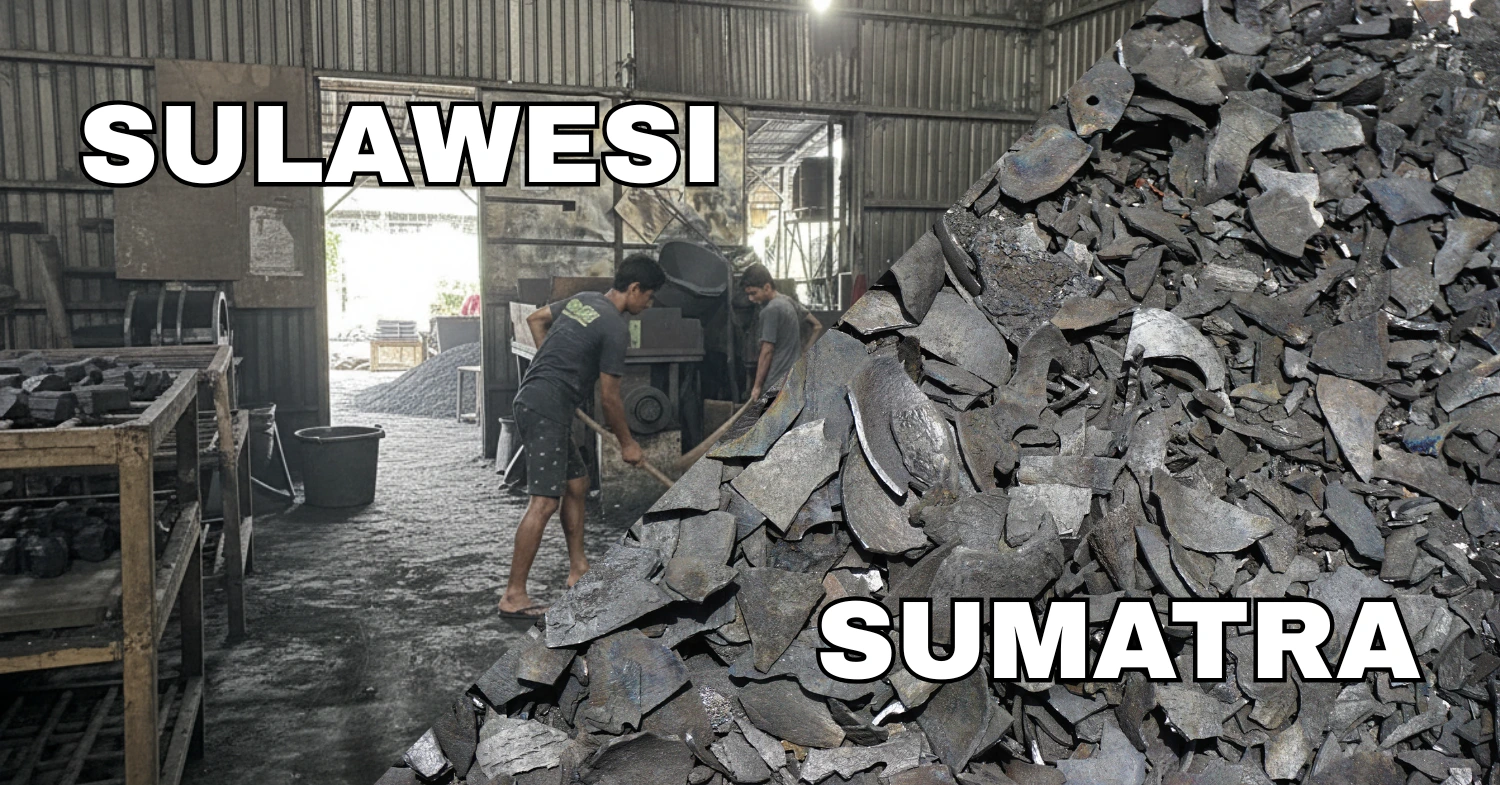
Trying to figure out which Indonesian coconut charcoal won’t leave your customers complaining about weird aftertastes or coals that die faster than a smartphone battery. And now you’ve got another decision to make: Sulawesi or Sumatra?
Indonesian coconut charcoal has become the gold standard for shisha because of its unique properties. We’re talking high carbon content, minimal ash production, and that clean burn everyone raves about. Research shows that Indonesian coconut shell charcoal delivers consistent quality that’s hard to match elsewhere.
So let’s break this down like we’re having coffee together.
Sulawesi Charcoal: The Premium Performer
What Makes Sulawesi Special?
Sulawesi sits in the heart of Indonesia, surrounded by pristine waters and blessed with volcanic soil. The coconuts here? They’re different. The shells tend to be denser, harder, and they produce charcoal that burns hotter and longer.
I’ve heard from multiple lounge owners in Germany and the UK who swear by Sulawesi charcoal. Why? Because when you’re charging premium prices for a shisha session, you can’t have coals dying halfway through. Your customers notice these things.
The density of Sulawesi coconut shells translates directly to performance. You get:
- Long burn times (we’re talking 90 to 120+ minutes consistently)
- High and Stable heat output that maintains temperature stability
- Minimal ash residue that keeps your setup cleaner
- Almost zero sparking during ignition
The Sulawesi Production Process
Sulawesi producers have refined their carbonization process over generations. Many factories there still use traditional kilns combined with modern quality control. It’s this blend of old and new that creates such consistent results.
The shells undergo carbonization at temperatures between 500 to 700 degrees Celsius. This sweet spot ensures complete carbon conversion without over-burning. Then comes the compression stage, where the charcoal powder gets mixed with natural binders (usually tapioca starch) and pressed into those cube or hexagonal shapes you’re familiar with.
Who Should Choose Sulawesi Charcoal?
You’re a perfect match for Sulawesi if you’re:
- Running premium shisha lounges where quality justifies higher prices
- Targeting European markets where customers know their stuff
- Building a brand around “premium” or “luxury” positioning
- Working with high-end shisha tobacco that needs consistent heat
Sumatra Charcoal: The Reliable Workhorse
Understanding Sumatra's Advantage
Sumatra doesn’t mess around either. This island is Indonesia’s coconut powerhouse, producing massive volumes with impressive consistency. If Sulawesi is the boutique producer, Sumatra is the reliable factory that never sleeps.
Sumatra’s coconut plantations are enormous. We’re talking industrial scale here. This means better economies of scale, more established supply chains, and generally more competitive pricing. For many importers, that’s the clincher.
The charcoal from Sumatra performs well. Really well. It might not have that extra 10% edge that Sulawesi offers, but for most applications, it’s more than sufficient. Your average shisha smoker won’t notice the difference between an 80-minute burn and a 90-minute burn.
Sumatra's Production Capabilities
Sumatra factories have embraced modern production techniques. Many facilities there run automated production lines that can churn out containers worth of charcoal with remarkable consistency. This matters when you’re placing orders for multiple containers and need every batch to match.
The quality control systems in established Sumatra factories rival anything you’d find elsewhere. They’ve had to adapt to meet international standards, especially as European and Middle Eastern markets have become more demanding about certifications and testing.
Who Benefits Most from Sumatra Charcoal?
Sumatra makes sense if you’re:
- Managing mid-tier shisha cafes where value matters
- Operating in price-sensitive markets
- Needing consistent large volume supplies
- Building a business model around competitive pricing
- Just entering the market and testing waters
What Are the Key Differences Between Sulawesi and Sumatra Coconut Charcoal?
Let’s get tactical. Here’s what actually separates these two options when you’re making buying decisions:
Burn Performance Comparison
| Feature | Sulawesi Charcoal | Sumatra Charcoal |
|---|---|---|
| Average Burn Time | 100-120+ minutes | 100-120+ minutes |
| Heat Output | High and consistent | Higher and more calorie |
| Ash Production | 2.0%-2.5% | 1.8%-2.0% |
| Ignition Time | 8-12 minutes | 8-12 minutes |
| Temperature Stability | Excellent | Good to very good |
| Sparking/Popping | Minimal to none | Occasional |
Physical Characteristics
The density tells the story. Sulawesi charcoal typically weighs in at slightly higher density (around 0.7 to 0.8 g/cm³) compared to Sumatra (0.6 to 0.75 g/cm³). That might not sound like much, but it translates to performance differences your customers will notice.
Sulawesi cubes often have a darker, more uniform color. The surface texture tends to be smoother, which some people believe indicates better compression and fewer air pockets. Sumatra charcoal can vary more in appearance, though quality producers maintain tight specifications.
Raw Material Quality
Both islands produce excellent coconuts, but there are subtle differences. Sulawesi’s volcanic soil and specific climate conditions create coconuts with particularly hard shells. Sumatra’s massive plantations ensure abundant supply but with slightly more variation in shell characteristics.
The age of the coconuts at harvest matters too. Sulawesi producers often have more control over their supply chain, ensuring shells come from fully mature coconuts. Sumatra’s industrial scale sometimes means mixing shells from different maturity levels.
Which Charcoal Type Is More Suitable for Premium Shisha Experience
The Premium European Market Perspective
If you’re operating in London, Berlin, or Paris, Sulawesi charcoal is your friend. These markets have sophisticated customers who notice quality differences. They’ll complain if coals die early or produce excessive ash.
European premium lounges typically benefit from:
- Brand differentiation: You can market the superior Indonesian origin
- Reduced complaints: Fewer coal-related issues means happier customers
- Higher margins: Premium charcoal justifies premium pricing
- Repeat business: Quality consistency builds loyalty
The Middle Eastern Premium Market
Middle Eastern markets present an interesting case. Countries like Iraq, Saudi Arabia, and Lebanon have extremely discerning shisha customers. They’ve grown up with the tradition and notice everything.
Many top-tier lounges in Baghdad, Beirut, and Riyadh use Sulawesi charcoal exclusively. They’ve found that the slight price premium disappears when you factor in customer satisfaction and reduced operational issues. When you’re serving 200+ customers daily, reliable performance matters more than saving a few dollars per kilo.
The Mid-Tier Sweet Spot
Here’s the thing though. Not every “premium” lounge needs the absolute top tier charcoal. If you’re running a successful mid-premium operation where quality matters but so does margin, high-grade Sumatra charcoal might actually be the smarter choice.
You can source excellent Sumatra charcoal that performs at 90% of Sulawesi’s level but costs 85% of the price. That math works beautifully for many businesses.
Making Your Final Decision
Choose Sulawesi If...
- High heat stability
- Better pairing with Virginia tobacco
- Premium quality for luxury shisha user
Choose Sumatra If...
- Lower ash content (1.8% – 2.0%)
- Higher heat output, suitable for dark leaf tobacco
- Consistent quality at competitive prices
No matter which option you choose, coconut charcoal from both Sulawesi and Sumatra offers excellent performance for shisha. The key is to match the right charcoal material with your market needs.